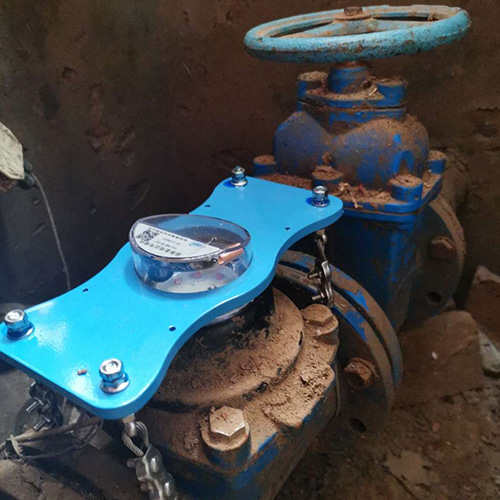
In urban water supply systems, a large number of mechanical water meters are still in use. They rely on manual meter reading, which leads to problems such as low efficiency, large errors and lagging data. Directly replacing smart water meters is costly and complex in engineering. Installing data sampling and remote transmission devices on the basis of the original mechanical meters can not only retain the measurement structure of the mechanical meters but also achieve automatic data collection and remote transmission, improving the efficiency of water supply management at a lower cost. This has become the preferred path for the transformation of old water meters.
1.Transformation methods and technical implementation
A sampling module is installed on the dial gear or counter of a mechanical water meter. The sampling module is equipped with a high-precision sensor that converts mechanical readings into electronic readings by sensing the rotation or position changes of mechanical components. For instance, by using a Hall sensor to sense the number of gear rotations and combining it with the measurement parameters of the water meter, the corresponding water consumption data can be calculated. The sampling module encodes and processes the converted electronic data. Through the built-in wireless communication module (such as NB-IoT, LoRa, etc.) or wired communication interface (such as RS485), the data is transmitted to the data concentrator at the set cycle (such as per hour or per day), and finally uploaded to the management platform.
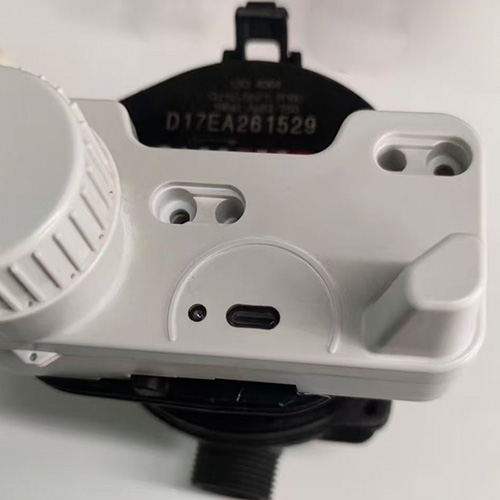
2.The method of installing a camera device for renovation
Install a micro camera device above the mechanical water meter dial to take pictures of the dial readings at set time intervals (such as every half an hour or one hour). The camera device is equipped with an image recognition algorithm chip. After the shooting is completed, the photos are processed. Through optical character recognition (OCR) technology, the mechanical degrees on the dial are recognized and converted into electronic readings. The converted electronic data, after being encrypted, is uploaded to the cloud server through wireless communication modules (such as 4G, 5G), and then received, stored and analyzed by the management platform.